Sunday, 13 November 2022

National Blog Posting Month 2022 - #13

Today was Remembrance Sunday here in the UK. King Charles III attended the national commemoration at the Cenotaph in London, for the first time as monarch. 

I did not attend the service at the War Memorial, but passed by it as part of my Sunday afternoon stroll. The 6 miles also took in the Waterwheel, Cross Street, Sand Street and the newly completed Sinclair Avenue estate. The weather was bright, sunny and very mild: 15C is not out of place on a summer's day. 


Saturday, 12 November 2022

National Blog Posting Month 2022 - #12

 PB111794 PB111795
The shelves in our Tesco superstore were empty yesterday, empty of bread and fresh produce. The ferry was unable to sail, and all goods that we use in this island comes across the sea. I posted these innocent images with the caption "Tesco is an empire of empty shelves today", and the reaction was breathtaking in its excess. 

I do think it is indicative of the times we live in, with people stressing about the cost of living, political uncertainty, a war in Ukraine and - the uncertainty of supplies. The latter is nothing new, and when you live in an island that lies 50 miles offshore, at a latitude of 58 degrees north, this is what happens. 

The shelves are full again today.

Friday, 11 November 2022

National Blog Posting Month 2022 - #11

 On the eleventh hour of the eleventh day of the eleventh month in 1918, the guns fell silent on the Western Front, out at sea and across other theatres of engagement of what was then known as the Great War. After millions had lost their lives in a conflict that had come to span the globe, hostilities came to an end. For just under twenty years. 

Seven weeks later, two hundred and one sailors returning home to the island of Lewis in Scotland were lost when their transport, His Majesty's Yacht Iolaire sank after hitting rocks just outside Stornoway. Of those lost, the bodies of more than sixty were never recovered. The island community, which had been celebrating the end of four years of war, which had claimed more than a thousand of their number, was cast into profound mourning. The echoes of that terrible loss can still be felt today. 

At the going down of the sun, and in the morning
We will remember them

Aig àm dol fodha na grèine agus anns a’ mhadainn
Bidh sinn gan cuimhneachadh


Thursday, 10 November 2022

National Blog Posting Month 2022 - #10

 It's been a thoroughly wet and quite windy day. Wind and rain have subsided a little as evening winds down towards midnight. No ferry service today, or tomorrow due to the strong winds. Tomorrow will be Armistice Day, and I'll blog about that separately. 

Eighteen years ago, I washed up on the shores of the Western Isles. At 4.45pm, just as darkness fell, I stepped off the MV Hebrides at Lochmaddy, and proceeded to a place I had booked for the night. It was closed, so I had to backtrack into the village and book into the hotel. I revisited Lochmaddy a couple of times, in 2009 and 2014 (passing through), in 2013 to meet a friend. 


Wednesday, 9 November 2022

National Blog Posting Month 2022 - #09

It is 84 years ago since the Night of Broken Glass [Kristallnacht]. That night, an organised mob of Nazi forces and sympathisers went on the rampage in towns and cities across Germany, smashing and destroying Jewish-owned property and businesses. It was a foretaste of what was to come during World War II. The extermination of anyone deemed sub-human by the warped mind of Adolf Hitler and his henchmen. Jews topped their league of the unfit, closely followed by gypsies, the mentally ill and many many others. The Reichskristallnacht was a night of infamy, and not just to Germany. Hitler had already been allowed to get away with murder for several years beforehand. In 1936, he occupied the Rhineland which had been ceded to France at the end of the First World War. The League of Nations, the predecessor of the United Nations, cried wolf but had no bite. On 12 March 1938, Nazi forces marched into Austria to join that country to Germany, an event referred to as the Anschluss. Neville Chamberlain flew to Munich to meet with Adolf Hitler on 30 September 1938, returning with the infamous phrase: "Peace for our time". Six weeks later, the Reichskristallnacht took place. Only a few months later, Germany invaded the Sudetenland area of Czecho-Slovakia, and again, nobody moved a finger to stop. In September 1939, Hitler thought he could get away with the invasion of Poland. But this time, it prompted a declaration of war, signalling the outbreak of the Second World War. The lights have gone out in Europe, it was said at the time. The lights in Europe had already been extinguished in 1914, and had not been relit, not even at the end of the First World War. The Versailles Peace Treaty of June 1919 contained all the ingredients for another war, which duly materialised.
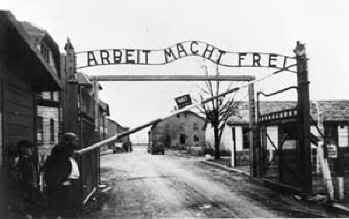
After the unspeakable atrocities of the Second World War, Germany was divided into four by the victorious allies. The British, French and American sectors became West Germany, whilst the Soviet sector was turned into East Germany, a communist state. Berlin was similarly divided. Until 1961, people from the East fled to the West in droves. A barrier was erected across Berlin in August 1961, later replaced by a high, concrete wall. Similar barriers were put up along the borders between East and West Germany. Anyone trying to flee from East to West was shot on sight, no questions asked. The advent of Mikhail Gorbatchov as leader of the USSR in the 1980s heralded a start of change. And when this wind of change blew across eastern Europe, it blew away all the communist regimes within the space of a few months in 1989.

That event was never properly accepted by Vladimir Putin, then a KGB officer in Dresden, former East Germany. As president of the Russian Federation, he is wanting to make Russia great again, and reclaim empire, lost in 1989. He sought to annexe the whole of Ukraine by invasion in February this year, 2022. But resistance proved stiffer than he anticipated, and with the help of many nations, Putin's war of conquest has not achieved its objectives. This is an on-going event, claiming tens of thousands of lives, and wreaking untold devastation. Its eventual outcome is shrouded in the fog of the future. The past continues to echo, From as far back as that pistol shot in Sarajevo on 28th June 1914, which heralded the start of the Great War. The crippling reparations, visited upon Germany after the 1919 Armistice bled that country's economy white, and created a fertile breeding ground for the extreme ideologies espoused by Adolf Hitler.
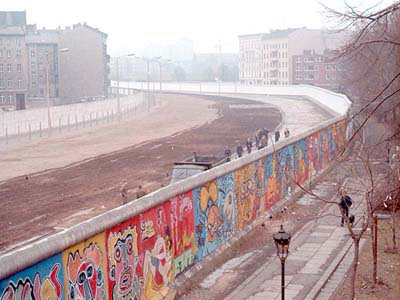
The Berlin Wall was torn down on 9 November 1989, and you can see the dilemma. Do we remember the Kristallnacht, and not celebrate the reunification of Germany? Do we celebrate the reunification, and ignore the Night of Broken Glass? Maybe the two can be reconciled. The Berliners remember the Kristallnacht in a very low-key but poignant manner. Every year, in the evening of November 9th, candles are left on the doorsteps of houses that were ransacked that night.

The flame, burning at the top of this post, is my candle of remembrance for Kristallnacht.

Tuesday, 8 November 2022

National Blog Posting Month 2022 - #08

 PB061749 PB061748 PB061747 PB061746 PB061745
Five sculptures, depicting characters from the Gruffalo, a story by Julia Donaldson. I have asked for a sign to be installed to point to its presence.

Monday, 7 November 2022

National Blog Posting Month 2022 - #07

 On Sunday, I went into Lews Castle again. Whenever I happen by, I take the opportunity to pop in and have a look. The Castle is actually nothing more than a mansion, built in the middle of the 19th century. The funding was generated through the opium trade in China, with Sir James Matheson, baronet, at the heart of it. He even got to the British government to foment a war with China over the stuff. Opium is the base material from which all opioids, including morphine and codeine are extracted. Heroin is a synthetic form of morphine, with two acetyl groups hitched onto the molecule. 

The Castle was last owned privately by Lord Leverhulme, who died in 1925. He left it to the community, which eventually turned it into a college. After it fell into disrepair in the 1970s and 80s, the college moved to a new building next door, and the Castle slowly mouldered away. If it had not been for the refurbishment of 2015, it would have collapsed. As it was, Lews Castle was lovingly restored and the results never cease to amaze me. 

When one of my friends attended its reopening, on 16 July 2016, she burst into tears upon seeing the ornate entrance hall, the magnificent ballroom and the finery of the other staterooms. For all the riches and opulence displayed there, Sir James Matheson was laird over a population of desperately poor tenantry. In 1851, he organised for those that had fallen behind with their rent passage to Canada. They were appointed volunteers, if you catch my drift. Rather than help them with more land, Matheson bumped them off. 

By all means, visit Lews Castle. Have a cuppa in the Stonehouse Cafe. But spare a thought for the poor people that were subjected to its 19th century owner's whims.